
Why AI Infrastructure Is Constrained by Equipment rather than GPU's
Electrical equipment availability increasingly determines data center construction sequencing.
Strategic Advisory & Consulting Capabilities
AI Bill of Materials
Model, data, compute, tooling, vendors.
We inventory your end-to-end AI stack—models, datasets, feature stores, orchestration, compute, and operational tooling—to reveal dependencies, cost drivers, and vendor lock‑in risks, forming a clear build vs. buy plan.
Networking
Topology design, interconnects, bandwidth planning.
We map east/west and north/south traffic, select the right interconnects (InfiniBand or Ethernet), and design fabric topology, QoS, and redundancy aligned to model parallelism and target SLOs.
Design
Systems architecture, model selection, and prototyping.
We translate business objectives into a pragmatic architecture—choosing models, defining serving patterns and data flows, and specifying observability—so teams can move from concept to build with confidence.
Inference & Work Assessment
Latency/cost analysis, throughput sizing, workload mapping.
We profile workloads and quantify latency–throughput trade‑offs, optimize batching and pagination, and size GPU/CPU footprints to hit cost‑per‑request and quality targets at your expected demand.
Tokenomics & Budget Model
Unit economics, pricing mechanisms, runway planning.
We construct bottom‑up unit economics: demand scenarios, usage incentives, pricing curves, emissions/vesting (if applicable), and runway sensitivities—so finance and product share a single source of truth.
Due Diligence
Technical, operational, and vendor risk review.
We evaluate codebase quality, security and compliance posture, MLOps maturity, delivery readiness, and vendor contracts, highlighting material risks and a prioritized remediation roadmap.
TAYLORED INDUSTRY REPORTS

Why AI Infrastructure Is Constrained by Equipment rather than GPU's
Deep dive into capex/opex, utilization, and supply constraints across GPU fleets and cloud, with scenarios for procurement and allocation strategies.

The Physics, Economics, and Supply Chain of the Liquid Cooling Transition
Air Is No Longer Sufficient and who will Capture the Infrastructure Transition.
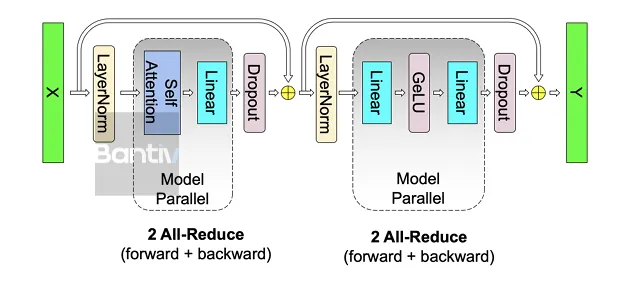
How microsecond buffer event could turn into a Million-Dollar Training Loss
Why the Switch Has No Viable Response to AllReduce Incast